


4 Most Common Rejection By USPTO or PCT

Updated: Mar 12
Since 2006, I have been working extensively on patent drawings and have handled thousands of cases across a wide range of inventions. While many projects involve preparing drawings from scratch, quite often clients approach me after their drawings have been rejected by the USPTO (United States Patent and Trademark Office) or during PCT (Patent Cooperation Treaty) applications through WIPO.
While working on these Office Actions and Invitations to Correct Defects, I began noticing certain patterns in the types of objections raised against patent drawings. In many cases, the issues are not related to the invention itself but rather to basic drawing compliance requirements.
Some of the most common problems include:
Text that is too small
Blurry or unclear drawings
Poor line quality
Drawings extending beyond the allowed margins
Inconsistent views between figures
Both the USPTO and the PCT system provide detailed guidelines for preparing patent drawings. However, these guidelines can be quite technical and sometimes difficult to interpret, especially for inventors or new patent illustrators.
In this article, I highlight four of the most common drawing-related rejections that appear in Office Actions and defect notices. Understanding these issues can help inventors, patent agents, and illustrators prepare drawings that meet the required standards and avoid unnecessary delays in the patent filing process.
The four most common drawing rejections by the USPTO and PCT are discussed below.
Sheet Margin Rejection
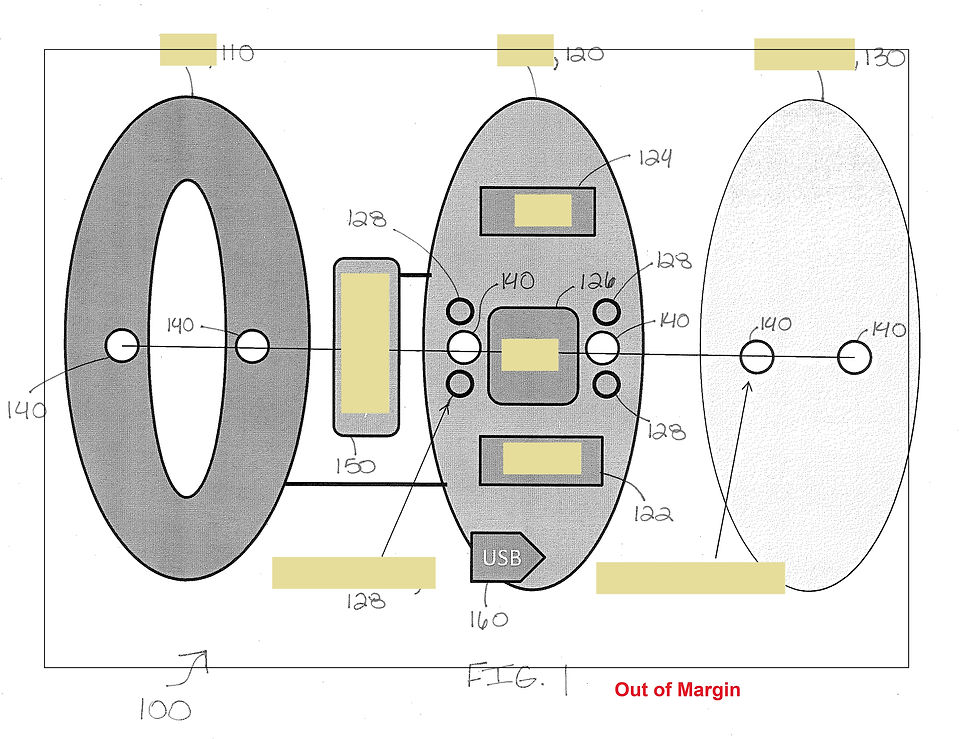
A very common rejection is the drawing out of the margins.
Here are the guidelines:
A4 Sheet or Letter -
top margin - 2.5 cm (1 inch),
left-side margin - 2.5 cm (1 inch),
right-side margin - 1.5 cm (5/8 inch),
bottom margin - 1 cm (3/8 inch)
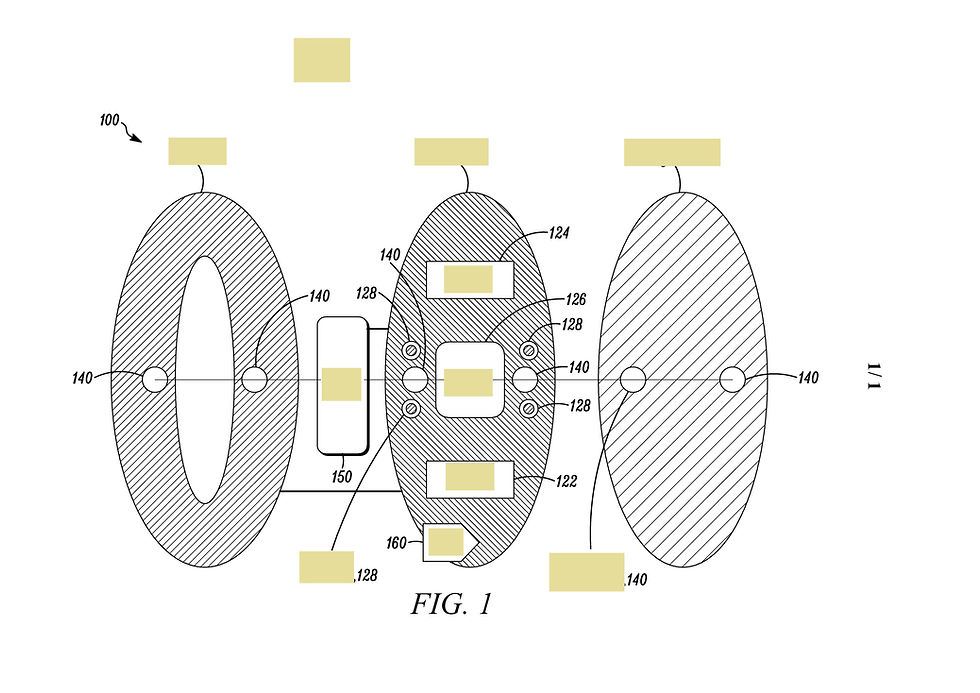
Before preparing drawings for patent filing, it is always advisable to create a template with the required margins as specified by the patent office. This helps ensure that the drawings remain within the permitted boundaries.
Once the template is ready, the drawings can be scaled up or down so that they fit properly within the borderlines. It is also important to use the entire sheet space efficiently so that the views are clear, well-proportioned, and easy to understand. Proper use of space helps maintain good drawing quality and improves overall readability.
Line Quality
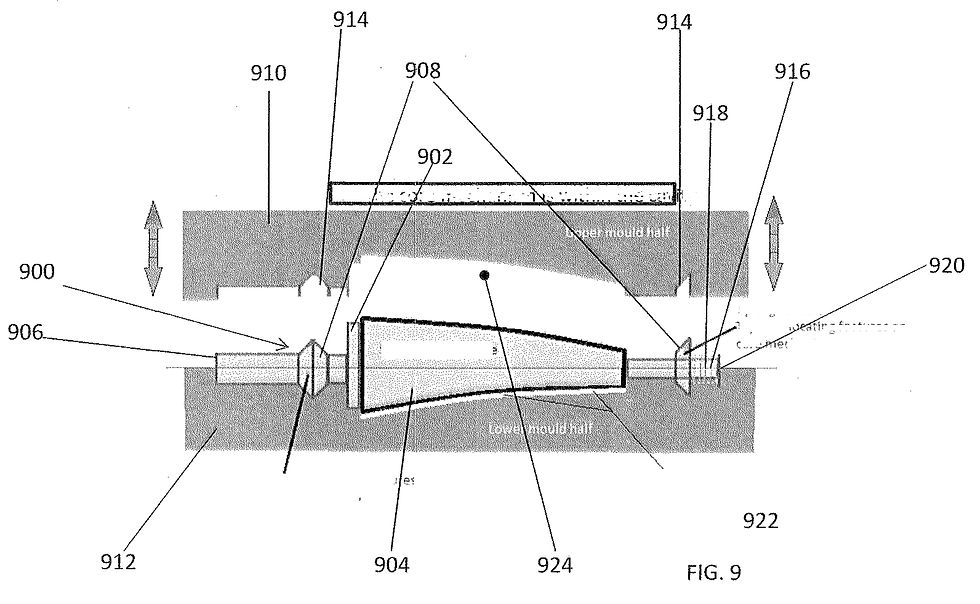
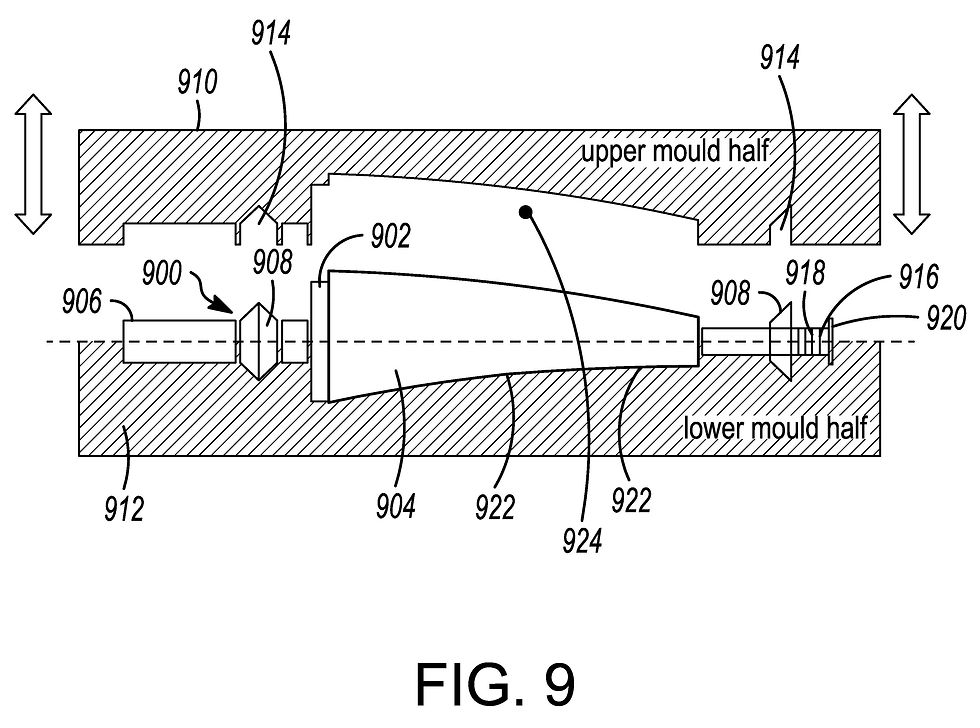
Another common rejection from the Patent and Trademark Office (PTO) relates to poor line quality in the drawings. Patent offices generally prefer line art drawings rather than colored or shaded images. Using clean line drawings not only reduces unnecessary ink usage but also ensures better clarity.
Since patent drawings are often reproduced or published multiple times, they must remain clear and legible throughout the process. For this reason, the lines should be sharp, consistent, and uniform in thickness. Even the lightest lines used for shading should not be thinner than 0.1 mm, ensuring that all details remain visible after reproduction.
Text Height
One of the most frequent objections I encounter is text that is too small. According to PTO guidelines, the height of letters should not be less than 0.32 cm.
To avoid this issue, it is recommended to use text with a minimum size equivalent to 12-point font or larger. If you are preparing drawings in AutoCAD, using a text height of 0.13 inches generally meets the required standards and helps avoid this rejection.


Grayscale Drawings
Another common objection raised by the PTO involves the use of grayscale drawings. In most cases, colored or grayscale images are not permitted unless the colour itself is essential to understanding the invention.
For example, colour may be acceptable in cases such as heat maps or certain chemical treatments, where the colour represents a change in material properties or texture. In such situations, grayscale or colour illustrations may be justified.
An example where a coloured drawing is allowed.

If the invention can be clearly illustrated using standard line drawings, the PTO will likely object to grayscale images. Therefore, it is generally best to prepare drawings in clean line-art format.


There are several other common drawing-related objections as well, such as inconsistent views, reference numbers appearing in drawings but not mentioned in the specification, incorrect view orientation, and similar issues. I will discuss these topics in my next article.
If you need assistance with professional patent drawings, feel free to contact us:
Email: info@desillus.comPhone: +1-647-403-7719
Our team at Desillus Solutions Inc. will be happy to help you prepare high-quality, compliant patent illustrations for your application.


Comments